How Marketers Can Strategically Connect Their Personal Branding Initiatives by Publishing a Book


In this episode we are unlocking the secrets of successful book publishing for marketers. There is a lot to think about in the competitive and complex world of book publishing.
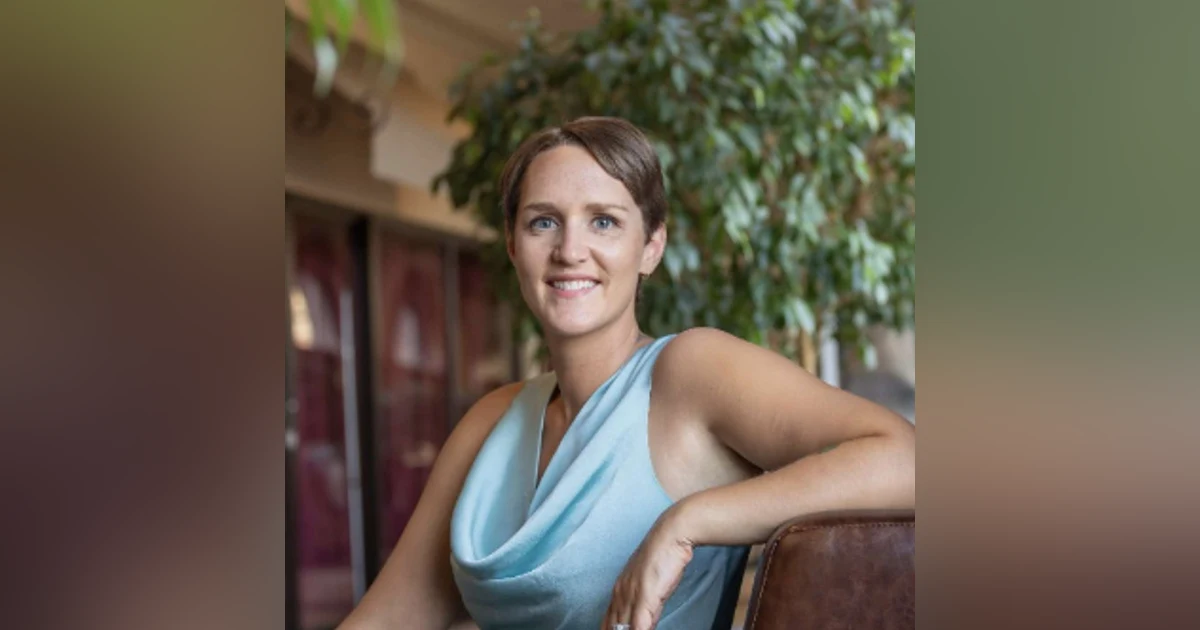
Our guest is a publishing expert Larissa Soehn. She shares valuable insights into building a successful business, particularly in the sphere of helping authors publish their work. She delves into her journey of establishing her company in 2021 with the aim of guiding aspiring authors to successfully write and share their books.
Larissa highlights the significance of forming genuine connections rather than resorting to cold outreach methods, emphasizing strategic partnerships and networking to amplify one's reach. She also discusses the impactful strategy of distributing her books to affiliates and network partners to foster relationships and support mutual growth. Additionally, the conversation explores the distinction between solo authors and multi-author books, the advantages and challenges of self-publishing versus traditional publishing, and the importance of aligning one's publishing strategy with audience preferences and consumption habits. The episode concludes with Larissa offering advice on using books as a central pillar to strengthen personal branding, especially for authors aiming to expand their speaking and coaching careers.
Visit the Remarkable Marketing Podcast website to see all our episodes.
Visit the Remarkable Marketing Podcast on YouTube
00:38 Strategies for Effective Marketing and Networking in Publishing
01:18 Building Genuine Connections and Leveraging Networks
02:38 The Power of Books in Networking and Business Growth
06:36 The Evolution of Authorship and Publishing Trends
08:35 Bridging the Gap Between Self-Publishing and Traditional Quality
10:21 Strategic Book Publishing and Brand Building
12:38 Navigating Book Formats and Audience Consumption Preferences
15:45 The Debate on Book Length and Audience Engagement
20:18 Closing Thoughts and the Role of Publishing Experts
0:00 Welcome to today's episode. Our guest today is Larissa. She is a marketer and a publishing expert. Welcome to the show. Thank you very much for having me. It's a pleasure to be here. Why don't we start off by you sharing a little bit about yourself with us, who you are and what you do? Absolutely so. I am a publishing expert, and my previous life, though, is pretty much as far away. You can get from entrepreneurship, from marketing, from networking, from any of the good things that actually go into building a business from the ground up. That's great. We love hearing about those wins, so why don't we jump right in and you can tell us a story about some of the best marketing you've done the marketing you're most proud of that has helped you drive some of those wins.
0:50 Absolutely so. I started my company, like I said, in 2021 with the goal of helping authors, aspiring authors, write their books and then share them with the world, and what I realized is that there were a lot of companies taking advantage of the fact that we, as authors, didn't know what we didn't know, and they were willing to sell us the moon and then deliver us a speck of dust and say, yep, here it is, see, oh, it's smaller than what you expected. I'm so sorry. So what I realized was that if I wanted to be good at what I was doing, if I wanted to reach an audience that genuinely wanted they valued connection above all else with their publisher or with their service provider, was that I had to form genuine connections, and that didn't come with cold DMing people.
1:35 It didn't come with even sharing. Really even sharing like a bunch of freebies and things like that wasn't going to do it because all these people, they didn't know me, they didn't know the essence of me, and so what I started doing was forming connections with people who had a similar audience to me. So we didn't serve in the same capacity, but we had the similar target audience. We wanted to work with powerhouse thought leaders, women, who were ready to take their brand to the next level, and we're looking for creative ways to do that that really showcase their voice. And so I started to get really strategic about who my friendships were, who my allegiances were, who I was willing to support, and then I created a system to effectively nurture and to measure the returns of those networks and how to find them and how to connect with them.
2:22 And one of my most proud things is that every one of my affiliates, every one of my network partners who is willing to warm, introduce me to their audience and share what I have is they all have a copy of my book, at least one of my books, if not multiples of them. And so I've really I'm trying to lead the way for my authors, for creative ways of using their book to build their network, so that their list is 10, 20 times larger than it would be if they were by themselves. People create revolutions and I think step two in the process is find like-minded people with similar interests to join your cause.
3:10 I think that's a great point is that you don't just want to form connections with anybody. Form connections with like-minded people with similar interests, with similar goals, and you're most likely to build a real connection with those people. I think that's an interesting insight, right. Yeah, it's just about finding your people. It's about the ability to share something that you're excited about, knowing, without a doubt, that your people are going to be just as excited as you are and they're going to want to share it because they see the value in what you're doing and they see how it can help their list. It's not just a cold, impersonal email swap. It's I truly believe in what she's doing, because I've read her books, because I've met with her, because I've had conversations.
3:57 We've been in group settings together. I know her, I want to connect with her, I want to support her and then that that's a mutual support, right, that's a mutual desire to see each other grow. Those are your people. Those are the people that you send free stuff to and you bring to your. I just launched my second sci-fi book and I had in the room at my launch party was a bunch of affiliate partners that are now more friends than business partners. Interesting. So have you been able to have success with the authors that you work with and helping them scale, like you suggested, by having a book, creating a book and then using that to grow their business?
4:44 Has that guerrilla tactic worked for a lot of the authors in a very impactful way that you've worked with? It does. Yeah, first of all, our books get us really good at understanding who our message is, for. We have to get really clear on who we're talking to, and once we're clear on who that person is, we can understand who else they're dealing with. So, for example, a lot of the authors that I deal with also have mindset coaches, business coaches, health and wealth coaches. So I go to those coaches and I say, hey, do you think your audience would be interested in what I'm doing and that's how I coach a lot of my authors as well is, once we find out who your person is, let's find out who else they're dealing with, let's find out who else they are, and then we'll rub elbows with those people and we will invite them into our circle and, likely, because they're serving the same people we are, they're interested in our books just as much as their list is, and so, by sending them free copies of our book, giving them an ebook, a signed copy, I have lots of strategies on how to use our book for network building that I don't see anyone else teaching because it's so powerful.
5:49 It's so powerful. I even use them like, for example, eric, if you want a copy of my book. Afterwards. I often send them out to podcast hosts as a thank you for their time and it keeps me in the front of their list. Right now I'm sitting on their desk, I'm sitting on their bookshelf. They're thinking about me and they aren't put off the idea of me coming back in six months and saying, hey, can we do this again? Because I was a grateful guest and I stood out. And so you've seen this strategy. Would you call it high impact? Yes, I would say. The first time I did it I signed two clients off of one book sent out. So I paid $6 for the shipping and $5 for the printing costs and I got over $20,000 worth of signed clients out of it.
6:31 So yes, overall I would say it's very effective. That's great, the fact that authors get a lot of credibility, almost automatic authority, because they are an author and I would say probably 70% of the guests that I've had on the podcast have a book. But have you seen that phenomenon, do you think that's the case? I think it's shifting. It used to be the case and I've been at the forefront of this what I would like to classify as a movement that multi author books are changing the game of publishing.
7:20 They are nothing against them, but they are diluting the power of a solo book because multi-author books are now calling themselves best-selling authors as well, but there isn't that distinguishing between I wrote a chapter versus I wrote an entire book on one topic, and so it is starting to dilute the power of the title author. Something that I've done to counteract this is we will have an event coming up in September to teach people how to use their collaboration chapter and then how to go solo, because there is more power in the solo book, but also how to distinguish yourself If you are a solo author. I typically say I'm the best-selling, I'm an international best-selling author of three solo books and just giving myself that one word distinguisher between.
8:07 I also have multi-author books, so don't get me wrong, I'm not coming down on multi-author at all. I'm just saying there is a difference between it and the world is going to start getting smart to that. That's an interesting variable. I'm curious what are your thoughts on self-publishing? People can publish on Amazon. Has that changed the dynamic at all? It has, yeah, and honestly it's for the better and for the worst. Traditional publishing is a gatekeeper, absolutely. It keeps amazing messages out of the world simply because of the fact that the author can't prove that they're going to be profitable right off the hop. And that is a serious detriment to our knowledge transfer, to sharing experiences, to connection, when we have these higher ups saying you're not going to make us enough money, your story isn't worth being told.
8:57 That's gross, that's icky, it doesn't deserve a place in a world where open communication is what's going to bind us together. But self publishing has its downsides as well. People can publish anything of any quality and that you want to support authors where we are still self-publishing. Authors are still self-publishing, they're still in control, they're still getting their message out, but they're doing it with the quality of traditional publishing and not sacrificing the expensive quality, because a lot of our authors are brand leaders, right, like you're talking to marketing people.
9:46 We know that the face we put out in the world has to be our best foot forward or face forward thing, and that can't be full of mistakes and errors that turn people off it. Unfortunately, it doesn't matter how good your message is If you have a poorly formatted, edited book. It's going to reflect badly on you. Yeah, the quality has to be there, and there's a lot of variables in there, from the quality of the strategic editing, the copy editing, I assume, even things like if you have terrible cover art for the book it won't get read, right I? Think there's a lot of things for are doing it to build their brand. How does it work together for authors to be a speaker and an author?
10:35 How does that work together to build someone's personal brand? So, yes, most of the authors that come to us either are or want to be speakers, they want to go on podcasts, they want to get media coverage and they want to 10X their business. They have these goals and the problem that they've had up until the point then they walk through my door is that they, in one corner they're doing speaking, and another they're doing media, and another they've got their funnels, and then they've got their website and they've got their emails and they're they have these fragments of everything that they should air quotes be doing and none of them connect together. And so what we do effectively with the book is we put this big old I've been using the circus tent analogy at this point we erect this really tall pole in the dead center and then we create a spider web or a tent that comes down and connects everything together.
11:23 So the book becomes the pillar to everything that they're going to do. It becomes the pillar to their media, it becomes the pillar to their speaking events, to their website, to their social media platforms. Everything funnels to the book, which has its own ecosystem, which has its own funnels, and we develop it together. And one of the programs that I'm most proud of that we implemented this year is called the selling system, and it is exactly that it's teaching a new author or an aspiring author, an established author, how to use their book as that center pillar, so that they can stop reworking the wheel all the time. Too many of us are in our businesses too deep because we don't see how things can connect together and how they should leverage each other.
12:07 By bringing in that book, we start to direct lines. So every time you have a speaking engagement, you have a set of working instructions, whether it's in your head or on paper, that tells you exactly what the steps are before and after to integrate your book, which integrates into the funnels, which gets people into your doors. That connectivity sounds like a pretty powerful secret sauce. I like it. I like it a lot. That's great. I'm curious on a slightly tactical note but I think marketers would in terms of what percentage of people consume in these different formats.
12:51 So there's eBooks, there's Kindle, there's softcover and hardcover print books and then there's audio books. What is your view on how people reading or consuming books is evolving? I'm curious. What do you advise people to do? I think the world is getting more friendly to literature, and I know there are some people that are going to argue that books are dying, and I think that technology is doing a great job at making sure that doesn't happen. There's even apps now where you can bite size, consume 300 word books in less than 50, 50, 15 minutes.
13:31 Like it's, technology is keeping up with the rapid rate of consumption and the different ways that we do want to consume. My biggest advice for authors when it comes to knowing which formats to chase like in our programs, we always do ebook and paperback. Those are the most basic, but you're right, there's also there's also the headway app that I was talking about with the 15 minute bite-sized clips. There's the audio books. There's different formats of eBooks and KDP and Kindle and all of these things, and the most important thing for authors to know is that you don't have to chase them all right now. You can have a two to three year plan that you want to do. You do eventually want to get on the other formats, but it doesn't all have to happen right now. What does need to happen right now is knowing where your audience is hanging out and how they like to consume their books.
14:17 So, for example, my book it's a couple of years old now. How to write a book, memoirs and autobiographies is a there's space to write in it. That would make a pretty terrible audio book. In fact, I'm listening to an audio book right now where every day is a new practice and there's a morning, noon and evening practice and I really regret getting it on audio book. I really wish they had this some sort of disclaimer, because it's so hard for me to consume and it doesn't make sense. It's got all these journal prompts and I have to pause and start and listen and write things down and it's awkward. And it's supposed to be a book on spirituality and I've never felt so disconnected from myself. So, understanding what the intent of your book is, how it's supposed to be consumed and how your audience likes to consume information.
15:00 Things to know about audio books, as people are almost always doing them while they're multitasking and so if you're trying to get them to heavily reflect and involve and delve deep into themselves, in an audio book where they're also washing the dishes and watching TV out of the corner of their eye, it's not going to land, whereas a paperback book where they can take notes in the spine or make journals, or you give them a companion workbook or something like that, it hits different. So knowing your intention and knowing how they like to consume their content is that's where you need to start. That will give you the clear line of sight on where to go first. I think that's great advice Thinking through strategically your type of book and your audience.
15:45 What is the format? It makes a lot of sense. One follow-up question to that, because I think a lot of the folks I've had on the show have talked about short and long format and some have been advocating for more short, helpful books. And you do a series of books because people's attention span is really short these days and I think this is a fascinating psychological thing because of how people are like no, I can't commit to a two-hour movie, but then they'll binge watch 10 one-hour episodes of something on Netflix. It's a very interesting psychological thing from my perspective. What are your thoughts about the short and long formats and doing multiple books on different topics or doing a masterbook that has it all in it?
16:34 Yeah. So this is very much personal preference. I prefer short and sweet. I name bite-sized chunks. I have ADHD you could label it as high functioning, although sometimes I feel like I'm a dog chasing a squirrel in a park. But I need the mental break, and so there's a couple of ways that you can do that. You can break your books up into per topic a hundred to 200 pages per topic and then you just have a series of six, for example. This does give your reader that sense of bite size on topic information. So, for example, if you have a book that is all about weight loss in general and it talks about the benefits of weight loss for your heart and the benefits for your joints and your muscles, and then it gives you all these tips and tricks on how to do it, but you're there and you're like really no, I just want to fit into my bathing suit for the summer.
17:19 I don't really care about the rest of it. They might not pick up your book because it's too much information. It's not as targeted as they need it to be. In the space they have to learn about this. In the space they have to explore about it. Our lives are busier than they have literally ever been before. With the onslaught of technology and the access to internet at the tip of our fingers, we are never bored anymore, and we should be. So our brains just cannot look at something that they know is not for them and be willing to pick it up. So, yeah, bite size does make sense in that sense. But again it comes back to knowing your audience. It's knowing their deep crave for information.
17:59 If you have a coaching program that does touch on all of those things in the weight loss spectrum and you're only giving them one piece, then you're only attracting people that want that one piece. They're going to look at the rest of your program and go not worth it. So you have to balance what is your sellout after the fact too. If you do have a micro program that only talks about fitting into your bikini for the summer and then bulking up and hibernating for the winter, cool, that's going to work for you. But if you have a program that also talks about the mental health aspect of weight loss and maintaining a healthy diet and connecting with nature, someone who's read your book and really only wanted that aspect is going to be like this. Isn't what I thought you were going to do.
18:39 That was a very roundabout answer to your question, because I do believe there's space for both. You have to balance a decision. That's the answer. I like it. I think that there's not one size fits all. It really does depend, but it's an important issue for people to think about. I don't think books are dying at all in the sense that the stats I've read is that in the last year there's been 3 million nonfiction books published. That sort of blew my mind, because every time someone says, have you read this book? I'm like I haven't read all 3 million books from last year yet.
19:35 No, working on it. My TBR yeah, people like podcasts, so people like audio books. Now, I actually prefer audio books for a lot of the books that I consume, but I also agree with you that it doesn't make sense for every book Some books. If I thought about audio book for it, I'd be like wow, that would be really painful. So I think these are all things for marketers and business leaders to think about when they say I want to do a book because it's a pretty big commitment. It takes time. If you're going to do it right and it's going to be successful and it's going to drive your business, whatever your strategy is, it's worth thinking through, I think, all of these sort of marketing nuances to get there right.
20:18 Yeah, and that's really where the partner comes in. Right, like why we hire marketers, why we hire people like me publishing experts, hybrid publishing houses is to have those conversations with people, because we are not we as business owners are not supposed to know how to do it all. We're not supposed to be thinking critically in every aspect of the business. We're supposed to be staying in our zone of genius, and our zone of genius is the topic at hand, not necessarily the delivery or how their people are going to consume it. It's how do I get the information into their hands, and that's where partners can help. Mark hiring marketing experts can help someone who is experiencing creative thinking when it comes to our books and our brands, because that's the number one reason we see those books sitting on shelves that never get bought is because they aren't trying creative strategies.
21:04 People are so smart to marketing strategies, they know when they're being sold to and they don't like it, and so we have to think creatively. How is it? We're not selling to you, we're serving you. We're trying to give you a tool to make your life better, happier, healthier, whatever the case might be, and by investing in me, you're going to see a direct return. That's great. So thank you very much for sharing your story today and these deep insights about all the fascinating variables about publishing. Everyone does not have to be a publishing expert, but if you'd like to learn more from a publishing expert, I'm going to link to her website and the show notes so you can easily connect with her and get more insights directly from her.
21:53 We really appreciate you being with us today. Thank you for making the time. Thank you so much. It's been a pleasure.


