Mastering Personal Branding: Proven Strategies for Success and Credibility
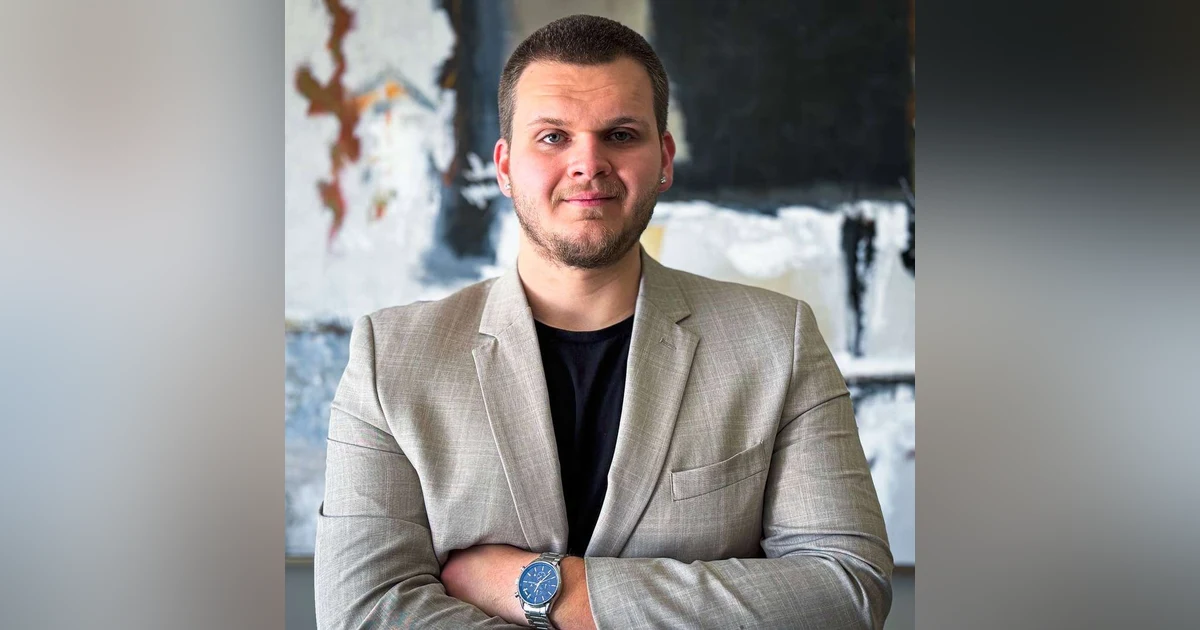


Ever wondered what sets a truly impactful personal brand apart from the rest? Join us as we talk personal branding with Isaac Mashman, a seasoned personal branding consultant. From network marketing to managing musical talent, Isaac's entrepreneurial journey has been diverse and enlightening. He shares with us his unique approach to personal branding, emphasizing that the essence of building a strong individual identity goes far beyond mere media appearances.
In our conversation, Isaac takes us through the nuts and bolts of constructing an effective personal brand. We explore the significance of Google Knowledge Panels, how to acquire one, and the crucial role of unique identifiers in distinguishing yourself. Isaac provides actionable advice on why and how to invest in personal branding, whether it's for income generation, achieving fame, or promoting a cause. Learn the steps to optimize and build a personal brand that stands the test of time.
Finally, we discuss the principles of personal branding success and the importance of maintaining credibility through ethical practices. Isaac speaks passionately about the value of genuine connections over follower counts and advises against shortcuts like purchasing followers or paying for features in prestigious publications. Instead, he advocates for recognition earned through genuine efforts and hard work. Tune in for practical tips on leveraging AI for content creation and standardizing social media handles to build a trustworthy personal brand.
Connect with Isaac
00:25 Isaac Mashman's Background
00:59 Transition to Personal Branding
01:53 Challenges in Modern PR
03:33 Defining Personal Branding
05:12 Building a Personal Brand
10:48 Importance of Google and Knowledge Panels
16:48 Reasons to Invest in Personal Branding
18:02 Success Stories and Strategies
22:25 Final Thoughts and Advice
Send us a Text Message, give feedback on the episode, suggest a guest or topic
Visit the Remarkable Marketing Podcast website to see all our episodes.
Visit the Remarkable Marketing Podcast on YouTube
Remarkable Marketing Podcast Highlights on Instagram
Eric Eden on LinkedIn
0:00 Welcome to today's episode. Today we are talking all things personal branding and we have a great guest to help us talk through this Isaac Mashman. Welcome to the show. Eric pleasure. Thank you for the invitation on. Appreciate you being with us. Why don't we start by you taking a minute or two to give us a little bit of your background, who you are, what you've done and what you're? doing Absolutely. My name is Isaac Mashman. I'm originally from Jacksonville, florida, born and raised. Even though we don't have the best football team in the league, I have a lot of pride for the Jags. No longer living in Jacksonville, however, I'm living in Little Rock, arkansas. I was raised in a single-parent home, similar struggle story to a lot of entrepreneurs.
0:43 I went into the industry of network marketing, did three different companies four different times, did a clothing line, dabbled in drop shipping, did a record label, managed musical talent, just trying my hand at a bunch of different things. Until today I now run a consulting firm that focuses on personal brand and you did some work in PR that led you to working in personal branding right. Yeah, my PR work was really the stepping stone for consulting and for personal brand consulting. I never ran a traditional PR firm that was let's book you on Forbes, let's book you on interviews. It was always let's sit down, have a consultation done with you not done for you and strategize what you can do to strengthen your personal brand.
1:25 Because if you think about traditional public relations firms, they focus on the outward image and only bookings and appearances typically, but less about let's actually sit down and strategize like a brand consultant. And so that's effectively what we did. But it decided to dissolve that firm actually May of this year and launch Mashman Consulting Group, which is my now new endeavor that I'm building, and it just feels great Less confusion, more clarity and it's a lot of fun. I'm excited to see where this goes. I'd say over the last five to 10 years in particular has gotten a lot harder because how media has evolved. It's not really very easy to get companies broadly promoted in the media because they don't want to write about puff pieces about companies.
2:12 They have limited resources. The funding for a lot of media companies has changed wildly in the last five years, and so part of it is just that personal branding should be a focus, because company branding, with PR in particular, is much more challenging in today's market right. We always focused on the business owner, not the business itself. Now you can land as a startup high caliber pieces, but it's going to require you or an assistant or somebody pitching a hundred times a week in order to land out or have relationships that are preexisting. I think that a lot of times, businesses want to get featured in the news when they don't have their products right, and we think about some that have been reviewed by Marquis Brownlee, like Frisker, for example.
2:58 The electric car vehicle was completely demolished by him on a review and they sent him a car, and the other day I was leaving my office and there was a car that I've never seen before parked outside on the street and I looked at it it was a Frisker and I thought, man, I'm pretty sure this is a trashy car. It might look good, but I automatically had that perception, and so I think it's not a matter of how difficult it is, but I think it's something that really isn't as much of a necessity as actually sitting down and building the brand from scratch and the social media and the image and building the website before you pitch Forbes. I think that's a little bit more of a tactile move. Absolutely. Everyone has a little bit of a different definition about personal branding. How are you defining what personal branding is and how do you help people with their personal branding?
3:44 I have a much more of a philosophical approach than a. This is your social media and this is your website, and this is something many people get wrong, in my opinion. I'll say that I have probably the best definition out there in terms of what your personal brand is. It is you, it is who you are. It doesn't matter what endeavor you are going down, what startup you're launching, what business you're doing with podcasts. You are going to be the one and only Eric Eden that has ever walked this earth, that is in your body and has your experiences and has lived your life. Your personal brand was created the moment you were born, and that's something most people don't realize, because, even if the internet disappeared tomorrow, internet and social media these are all marketing channels and ways for you to build your personal brand.
4:25 But just because you're creating a new Instagram page or creating a new website or pivoting, doesn't mean you're creating a new personal brand. And so, with that in mind, realizing that even if social media was to disappear tomorrow, you could go and shake hands with the business owner down the street and he would still have a perception of you and you'd still have a personal brand. So it's a lot bigger than people realize and think about today, in 2024. And that's something I'm really focusing on changing and influencing this philosophical approach to where you can get results on a much broader scale than just having a successful Instagram page. So when I look at, for example, executives and what they do for personal branding on sites using LinkedIn as an example, it feels 90% of people struggle to build out their personal brand on a number of levels.
5:21 They struggle to get a great headshot as a starter. They struggle to write a great 10-word headline. They struggle to write a good about section that pitches them in a compelling way. They struggle to feature their best work in a featured section. It seems like 90% of people need some guidance here. The feedback I've gotten from people is it's just very hard for people to talk about themselves and to come up with their own elevator pitch. Why do you think that is Part of it is this obsession with perfection and obsession over being authentic.
6:02 I think that the idea of being authentic is automatically inauthentic and there's a little bit of a radical thing to think. But if you're wanting to be your authentic self on social media, right there you are manipulating what you are portraying, so you're starting at a very bad level. So I think that when professionals are wanting to write a message, they're focusing too much on the professional side because it's easy to come up with a marketing message. Come on, I helped you X, y and Z. I helped these people get this result. How much more difficult can it be? That's so easy. But what people struggle is to talk about the personal side, and I had a consultation last week with a coach who was a pro athlete pretty much his entire life. He did competitive weightlifting on the Olympics team and all this other stuff.
6:44 And I asked him. I was like, let's call him Adam. I was like Adam, you're only talking about the coach, but I'm asking you who you are as the individual and as his identity is so wrapped up in athletics, he's not mentioning anything about who he is as a person. And if you think about the phrase personal brand and you draw a line down the middle, eric. You have personal here, which is you. It's who you are, your unique characteristics, your interests. Like I love Lord of the Rings, I'm addicted to coffee. I usually always have a coffee with me, but I've had six cups today, so I'm not drinking another one. And the other side is brand, the professional side, which is what you do to make money, your career. And so I think these people are really obsessing over perfection, trying to be authentic, which is creating even more confusion, and they're afraid or not certain on what they could talk about personally in order to effectively convey themselves.
7:35 So the interesting thing is I talked to a lot of other chief marketing officers who are peers of mine. Broadly, a lot of them will nod their head and say, yeah, I should work on my personal brand, but then they don't necessarily prioritize it because they have a lot of other things going on and it's potentially not an easy thing to do for them to think about how to describe themselves and how to pitch themselves, how to write their own headline. A lot of people just how to write their own headline, like a lot of people just they're anxious or shy about that or they just don't quite know where to start. And the problem is that in the market we're in right now, the wrong time to be starting to build your personal brand is probably like when you're in transition between jobs, right?
8:19 So how do you help people get going and get off the sidelines to to start working on their personal brand? What is it you do with clients to get them in? the game. You need to realize that building your personal brand is complementary to everything you're already doing. It's not something you have to add to your day-to-day. It's if you're already building your business or doing podcasting, or going and sitting down with clients. Have you ever considered recording that meeting and posting it? That's as simple as a start as you can be, and I think just being on social media and laying down that simple foundation is a really great starting point. I think the ideal client is always the person who has the success offline, but they don't have anything online a whole lot so they're able to take.
9:01 Let's say you're a doctor and you've been in practicing health for 20 years. You have 20 years of stories and 20 years of connections that you can reach out to, to get connected with on LinkedIn or Facebook or Instagram, and you can start laying down and building out your image as the doctor who helps X, y and Z, and maybe you have a certain thing that's unique about you. So, let's say, you're a doctor who loves the outdoors. You could start showcasing that personal side of you. So now you're not only the doctor but you're also the person that they're connecting with and that connection builds rapport and that rapport leads to more trust, more credibility and more opportunities long-term. It's like you don't want to just connect with the professional, you want to connect with the person, and that's where most people go wrong.
9:46 Now some starting points is you nailed it earlier when you said, on LinkedIn, for example, the headline, the high quality photo, the profile picture, the 101 characters, which is what I always use to craft a marketing message, because that's what the limit is on Facebook, when you're doing a personal profile, you have 101 characters. So if you can't explain what you do and who you are and 101 characters, you need to reevaluate what you're doing. So, for example, addicted to coffee and standards, I help public figures optimize and scale their personal brands Super concise. If I have more space, I'll include author, businessman, speaker, investor, podcaster, whatever.
10:30 If I have more space, I'll include those titles and such, but the core message is who I am a little emotional hook that can bring people in. Whether you're addicted to collecting old vinyls or you love the outdoors or you love fishing, it doesn't matter. And then you have the professional outline of what you do and what ways you can provide value, and I think the other thing is starting out with a Google search. If you run a Google search on your name, are you able to show up on the first page? And 90% of people can't because they share their name with other people. I had the blessing of having a very unique name. I hated it growing up because I didn't have a connection to it, but I realized it was a superpower and a tool that I could use. And so if you search up Isaac Mashman in Google, I dominate and that was done purposely and intentfully to where, if I'm ever pitching myself, I can say Google me and that does all of the work for me.
11:22 Yeah, I think that's great. In addition to the social sites, a lot of people do their research on Google versus social sites and you figured out some of the aspects around Google with the knowledge panel functionality, where you can be featured like a celebrity is featured. Can you talk a little bit about that? Yeah, and this is something that, just to say this upfront is if somebody approaches you and says that they can guarantee a knowledge panel or create a knowledge panel for you, they're lying through their teeth, because a Google knowledge panel is influenced. It is not created. So what you have to do is create enough high quality information and feed that to Google, feed that to the beast. So Google says that oh, we're crawling the internet. We see a bunch of these different pieces of information that say the same thing.
12:05 Maybe this is somebody that we should create a knowledge panel for. So it's influenced. It's not something you can just create or some backdoor Google employee can log in, and it's not like you can get verified by some backdoor deal, like in 2016 on Instagram. This is not the case. So authors, for example, nine times out of 10 have knowledge panels and they don't know. And what a knowledge panel is? A feature, rich snippet of information about a certain entity, about a business, about a person, about a book, about just something that is notable. I like to use the term. It is Google's form of verification and it typically, on browser, shows up on the right side or on your phone, it's the first thing that pops up.
12:46 It has a photo of the person or the logo of the business. It has information like where that person was born. So if you were to search up, give me a celebrity, eric, who's a celebrity you can think of, like Kim Kardashian, okay, so you think it's funny. I used her as an example earlier today too effective personal branding. Now, if you were to search up Kim Kardashian, you're going to see internet celebrity or American actor and then you're going to see where she was born photos of her quotes, videos, links, data about her parents and her spouses and her children all of that and that's a good thing, because that means that she has all that information available. And if you have that information available, you're able to answer questions indirectly and let your personal brand work for you 24-7.
13:31 And so if you're looking to get one, write a book. That's like the easiest thing I could give you, because otherwise, if you're trying, you could go the path that I originally took, which was I got a panel for my business first, but you have to get on so many startup directories and it takes a lot of work, but it's something I believe people need to be thinking about moving forward if they really want to be a public figure. Yeah, I think that there's a process to get a knowledge panel. It's not guaranteed, like you said, I've actually been working on getting mine, but it requires some effort. It's not like something you can just do in a day because you have to go out and get linked in other places. Actually, a really fun thing is that there's also a rock star named Eric Eden, who sadly is not me.
14:15 I have to work on getting enough Jews built up, like perhaps using my middle initial name, eric J Eden James. And one fun thing that you can do I was talking to some folks who were giving me this advice, saying there are sites you can use to build credibility as an individual In addition to writing a book. If you're a podcast host, you can get an account on IMDB, the Internet Movie Database, and you can get credits for starring and producing in your podcast. It's another creative thing that I think Google does weight in the knowledge panel. It's not the only thing you need. Other things you can do is work with somebody to do the appropriate way to create a wikipedia page about you.
15:00 Things like that helps there isn't even an appropriate way for that because it's all against terms of service for wikipedia. That's an entire topic in of itself. There, there are a lot of different ways of doing that, eric, and using your middle initial would probably be one of the best ways you can start standing out. I had somebody who who he's an audio engineer, he used to work with Jelly Roll and he has a couple of diamond plaques under his belt, but I think platinum plaques, but anyways, his name is Tristan Roberts, and a couple of years ago I searched up his name, tristan Roberts, and there was like an American rugby player not American, but British rugby player. We don't play rugby in America, man. But I asked him I was like what's your middle name, man? He's Tyler and I was like all right, so you use Tristan T Roberts and if you were to search up his name today, he takes up the entire first page.
15:41 And that's one of the easiest things you can do, because you're not going to win that battle against somebody who's already established or a rock star or somebody who's, for example, I had a call and it was Brian Johnson, and that name is shared the founder of Blueprint and Kernel, as well as the guitarist or singer of ACDC. It's just, you're not going to win that fight. So you have to be tactical about this, optimize all of your chances of showing up. So an IMDb is a good tool. And the other cool thing about this, too, is if you were to ask Amazon Alexa, imdb is what she pulls information from nine times out of 10. So if you were to ask her who Isaac Mashman is, an artificial intelligence is going to know about me because of that information.
16:24 I said, so, long-term, these are all strategies that a person can take if they really are serious about building their personal brand, but the person just starting out, I don't think it's necessarily important that you do this immediately, but long term thinking, you do. Makes sense. So, if people are interested in personal branding, what would you say is the reason why they should invest time, money, effort in personal branding? What's the upside? There are three reasons why somebody would want to take the time. It could be a combination of all three. The first is to make money. You want to make money, either directly through your personal brand, or indirectly, by driving attention to a business right.
17:10 That is one thing. The second is vanity or ego. Most entertainers want to be famous. So it's vanity, it's ego. Maybe you want to be famous. That's okay. I'm not here to dispute the moral conversation around that. Then you can also do it to drive awareness to a cause. Maybe you're passionate about something from your childhood or something from your past, or a certain nonprofit you care about, or a mission. You're mission oriented. Those are the three main reasons why, and you have to decide which one is the one that's important for you and then start taking the action steps and reverse engineering what you need to do to get there. So what does success look like? Maybe from some of the clients you helped or people that you could point to, that you would say these people have done the right things, they have a great personal brand and look at the impact it's had for them.
17:56 What examples would you give that people should strive towards or get inspired? by Omnipresence is huge. You need to be everywhere all the time. To where, like I said and this goes hand in hand with being discoverable to where, if you were to run a search on any client, they would show up and pop up on the first page of Google or they're able to improve the distribution of their podcast, because if you're taking the time to have a show, you need to make sure you're on as many places as possible and have as many algorithms working for you. Or an author who maybe just published through Amazon, not realizing that they could also get their book distributed and get into Barnes, noble, or have the audio book created or improve the digital distribution, noble, or have the audio book created or improve the digital distribution.
18:41 So, again, you can be on more places and you look better. Because the main goal, eric and this is like the master key of building a personal brand in 2024 is you have to position yourself as a public figure, a person of public trust, and the best indicator that you have done something right is you have more people who know about you than you know about them. So if you can go to an event and they come up to you and say, eric man, you changed my life or you helped me do X, y and Z through your podcast and you're looking at them like brother. I love and appreciate you, but I don't know who you are. That is an indicator that you've done something successful, because you've put yourself out there. Yeah, I think that's great, and it's not necessarily measuring success and personal branding by your number of followers.
19:25 It's probably also just the quality of the connection you can make with people. Right, undeniably. And I think that, for example, I was on a podcast a couple months ago and the guy has 100,000 subscribers on YouTube, which is a solid show. That's a really good number for an interview and a couple of weeks later he messaged me and said Isaac, because of the interview, somebody is doing a conference later this year that I'm also speaking at. He wants to have the conversation with you about you coming to the event and doing a training. Long story, short introductions were made and, because of one podcast interview and because of a couple of high quality relationships, I'm speaking at a conference in Denver, Colorado, in October. And that was through something that I did that was as simple as being on an interview that opened up the door to exposure and an introduction.
20:11 So what are some of the main things? When you sit down with someone, if they came to you and said I want to work with you on personal branding, how long does it take? What are the things that you would lay out for them, saying I can help you do these things? I know it may be different a little bit for everyone based on the industry they're in or where they're at, but broadly speaking, what are the things that you help people accomplish with personal branding? Two words optimization, scaling. So optimization looks like? And again we have to establish what their goals are with their personal brand. What are you looking to do? So we always solve their highest value problem first. So let's say, somebody again has a certain issue with their distribution or their social media struggling, or they're wanting to launch a book, but don't know how.
20:57 It's really cool because I'm able to come in and we as a team are able to say, all right, you need to do X, y and Z and outline a strategy to get there. So how would publishing a book? Look Now, if somebody was to already come to me and maybe they already have been putting out content. It's about optimizing the content that they're producing and the time that they're spending to create higher quality content, whether that's through leveraging artificial intelligence or outsourcing or delegating. And then also, it's as simple as Eric what is your social media handle? Most people have 25 different handles for every single social media platform they're on, and that's problematic.
21:38 It's, if you were to go, my handle is at Isaac Mashman across the board, and that was done purposefully so I could create a seamless brand, and that right. There is something so simple that 90% of people are screwed up with because they don't know that they could put something as simple as real at the end, or official, and be able to get the same handle across the board and from there scaling would look like all right. How can we get you in front of more people and get you in places where you can be edified? Because podcast interviews, press articles, collaborating with other people or speaking engagements all of those are forms of edification, because you and I both know we could talk about how great we are and how much we know and all this other stuff, but that's not nearly as impactful as if we have another person who's talking about how great we are, because it's not as biased.
22:22 Yeah, I agree a hundred percent. So I'm going to link to your website which has your book on it on personal branding. People can get that and get even more of your tips and advice. Any final thoughts that we didn't cover no, I think that you asked some really solid questions, very strategic. It's been good. I would say that don't take the instant gratification route, don't purchase the followers, don't pay the 10 grand for the forbes feature. That's against the terms of service and is illegal anyway. If you've done solid, you're able to land all these placements and do these things off the dirt on your boots more than just the money that's in your wallet, and because if I was to find out that you paid for the Forbes feature and it was unethical, you lose credibility in my book.
23:09 So you need to do things that keep your reputation solid, pristine and looking good. Awesome. Thanks so much for being with us today, Isaac. We appreciate it Absolutely, Eric.


